

EU Citizenship After Brexit: What Britons Lost
Picture this: you’re planning a long weekend in Spain, and you casually mention to a friend that you might stay on for a few months to work remotely. They look at you oddly and ask whether you’ve checked your visa situation. That’s the moment it hits you — the rights you once took for granted as a British citizen in the EU are gone. We’ve written this guide to unpack exactly what was lost when the Brexit transition period ended on 31 December 2020, what remnants of your old rights may still apply, and which realistic pathways back to EU citizenship remain open to UK nationals.
The End of Automatic EU Citizenship for Britons
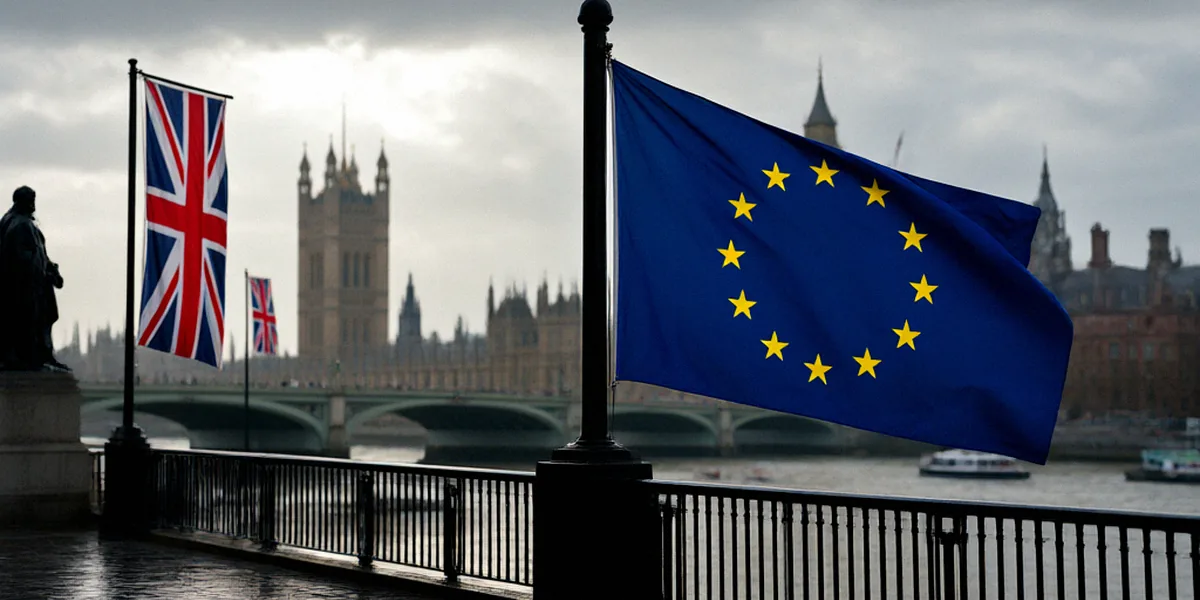
Before Brexit, UK nationals held EU citizenship automatically by virtue of the UK’s membership of the European Union. It wasn’t something you applied for or paid for — it came bundled with your passport and unlocked a set of enforceable rights across 27 member states. That arrangement came to an abrupt halt.
What EU Citizenship Actually Meant for UK Nationals
As an EU citizen, a British national could live, work, study, retire, and access healthcare in any EU member state with minimal bureaucracy. You could move to Berlin on a Friday and start a job on Monday without a residence permit. You had the right to vote in European Parliament elections, to petition the European Parliament, and to seek consular protection from any EU embassy anywhere in the world. These weren’t privileges granted by individual countries — they were treaty rights attached to citizenship of the Union itself.
The Legal Shift: From EU Citizens to Third-Country Nationals
When the transition period ended on 31 December 2020, UK nationals became what EU law calls “third-country nationals” — the same legal category as citizens of the United States, Australia, or India. There was no grandfathering of EU citizenship itself; it simply ceased to apply. The UK is now a non-EU country, and British citizens are subject to national immigration rules in each of the 27 member states, with all the visas, permits, and waiting periods those entail.
Free Movement Lost: What Britons Can No Longer Do
Free movement was the headline benefit of EU membership, and its loss is felt most keenly in everyday life. Britons no longer have an automatic right to live, work, study, or retire anywhere in the EU. Each member state now sets its own conditions, and most require a visa or permit for stays beyond short tourism.
The 90/180-Day Schengen Rule and Its Impact
British citizens can now spend only 90 days within any 180-day period in the Schengen area without a visa. This rolling rule catches people out constantly — a long summer in France plus a winter trip to Italy can push you over the limit without any single stay looking excessive. Overstaying can result in fines, entry bans, and future visa refusals. For second-home owners, frequent business travellers, and anyone with family spread across Europe, this is a genuine constraint on daily life.
Loss of EU-Wide Work and Study Rights
The days of simply packing a bag and taking a job in Amsterdam or a master’s programme in Milan are over. UK nationals now need work authorisation, and in most EU countries that means an employer must sponsor you and demonstrate that no suitable EU candidate could fill the role. Studying abroad requires a student visa, proof of funds, health insurance, and often substantial tuition fees that were previously waived or capped under EU rules. Erasmus+ participation for UK students has also ended, replaced by the smaller Turing Scheme.
Healthcare and Pet Travel Changes
The European Health Insurance Card (EHIC) as Britons knew it has been replaced by the UK Global Health Insurance Card (GHIC), which offers similar emergency cover in the EU but is not identical in scope. Pet passports issued in Great Britain are no longer valid for EU travel; owners now need an Animal Health Certificate for each trip, issued within ten days of travel. These small administrative losses add up to a noticeably more friction-filled relationship with Europe.
Residence Rights and the Withdrawal Agreement
If you were already living in an EU country before the end of the transition period, the picture is different. The Withdrawal Agreement protects certain rights for Britons who were resident in an EU member state on or before 31 December 2020. Crucially, though, these are protected residence rights — not EU citizenship. You retain the right to live, work, and access healthcare in your host country, but you don’t regain free movement across the rest of the EU.
Who Qualifies for Protected Residence Rights?
You generally qualify if you were lawfully resident in an EU country at the end of the transition period, or if you had started the process of moving. Family members may also be covered, including non-EU spouses and children. The exact evidence required varies by country, so we always advise keeping payslips, tenancy agreements, tax records, and registration documents from that period in a safe place.
The EU Settlement Scheme and Its EU Counterparts
The UK runs the EU Settlement Scheme for EU citizens living in Britain, granting settled or pre-settled status. On the continent, equivalent schemes exist:
- Spain: the TIE card (Tarjeta de Identidad de Extranjero) for UK nationals under the Withdrawal Agreement.
- France: the titre de séjour “accord de retrait” issued to protected Britons.
- Germany: the Aufenthaltsdokument-GB, a residence document confirming rights under the Agreement.
Deadlines have largely passed, but late applications are sometimes accepted where there’s reasonable grounds. If you’re unsure of your status, we recommend checking with the relevant national authority promptly.
The European Citizens’ Initiative: A Voice We Lost
One of the less-discussed losses is democratic. The European Citizens’ Initiative (ECI) allowed EU citizens to propose legislation directly to the European Commission, and UK nationals can no longer sign or organise one.
What Was the European Citizens’ Initiative?
Introduced under the Lisbon Treaty, the ECI lets one million EU citizens from at least seven member states call on the Commission to propose new laws. Successful campaigns have touched on animal welfare, water rights, and environmental protection. It was a genuine grassroots tool — not a symbolic gesture.
Why UK Nationals Can No Longer Participate
Participation in the ECI requires EU citizenship. Since UK nationals lost that status at the end of the transition period, they cannot sign initiatives, serve as organisers, or have their signatures counted. For campaigners and civic-minded Britons who once used the ECI to shape European policy, this is a quiet but significant loss of political influence.
Can Britons Regain EU Citizenship? Pathways and Pitfalls
The good news is that EU citizenship is still attainable for some Britons — just not automatically. The routes are real but each comes with paperwork, timelines, and costs. We’ve outlined the main options below.
Citizenship by Descent: Ireland, Italy, and Beyond
Irish citizenship by descent is the most popular route, thanks to Ireland’s generous rules and the Common Travel Area between the UK and Ireland. Anyone with an Irish-born parent or grandparent can generally apply through the Foreign Births Register. Italy, Poland, Hungary, and Germany also offer descent-based routes, though eligibility rules are stricter and documentation requirements can be formidable — particularly for Italian citizenship through the jure sanguinis process, which often requires tracing records back to a pre-1861 ancestor.
Naturalisation in an EU Country: Realistic Timelines
Naturalising in an EU country typically requires five to ten years of lawful residence, language proficiency, and often a civic integration test. If you can secure a residence permit — through work, study, family, or investment — naturalisation is a genuine long-term option. It’s slow, but for those committed to a life in Europe, it’s the most robust path.
Associate EU Citizenship: A Political Long Shot
The idea of “associate EU citizenship” for Britons has been floated by academics and some MEPs, but it has no legal basis and no realistic prospect of implementation. We mention it because it appears in headlines, but we’d caution strongly against making life plans around it.
For most Britons, EU citizenship after Brexit is genuinely lost — and understanding the remaining rights, the protected statuses under the Withdrawal Agreement, and the realistic nationality routes is essential for making informed decisions about work, family, property, and retirement in Europe. Our team at choosefreedom.eu tracks developments in this area closely and will keep updating as rules evolve.
FAQ
Can I still use my old EHIC card in the EU?
EHIC cards issued in the UK before Brexit remain valid until their expiry date, but new cards are now issued as GHICs. Both provide emergency healthcare cover in the EU, though the scope differs slightly from the original EHIC.
Does the Withdrawal Agreement give me free movement across the EU?
No. Protected residence rights apply in your host country only. You cannot use them to move freely to another EU member state — that would require meeting that country’s national immigration rules.
How long does Irish citizenship by descent take?
Applications through the Foreign Births Register typically take 9–12 months, though timelines fluctuate with demand. Once registered, you can apply for an Irish passport, giving you full EU citizenship.
Can I sign a European Citizens’ Initiative as a British citizen?
No. The ECI is open only to EU citizens, and UK nationals lost that eligibility when the transition period ended on 31 December 2020.
What happens if I overstay the 90/180-day Schengen limit?
Consequences vary by country but can include fines, detention, and entry bans of up to several years. Border officers track entries and exits electronically, so the rule is enforced more strictly than many travellers expect.